
Indoor humidity between 30% and 50% keeps a home comfortable and protects it from mold, mildew, and moisture damage. Poor ventilation, everyday household activities, and outdoor humidity working its way indoors are the most common causes of levels climbing above that range. Your HVAC system already helps manage humidity as it heats and cools, and dehumidifiers and better ventilation can fill in the gaps. The sections below cover where excess humidity comes from and the most effective ways to bring it back under control.
What Is Indoor Humidity and Why Does It Matter?
Indoor humidity is simply the amount of moisture present in the air inside your home, and keeping it in the right range matters more than most homeowners realize. The ideal target is between 30% and 50%.
Too much moisture creates a damp, uncomfortable atmosphere and encourages mold growth. Too little dries out skin, irritates the respiratory system, and can damage wood furniture and flooring over time.
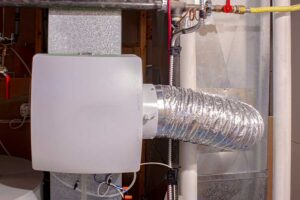
Whether your home is a mid-century property near Itasca Country Club or a newer build closer to Hamilton Lakes, humidity control depends on more than just your thermostat setting. Getting it right protects both your comfort and the condition of your home. A whole-house dehumidifier installation is often the most consistent way to keep humidity in that target range without constant manual adjustment.
What Causes High Indoor Humidity in Your Home?
High indoor humidity usually comes down to three sources: poor ventilation, everyday household activities, and outdoor moisture working its way inside.
- Poor ventilation: when air does not circulate properly, moisture builds up in bathrooms and kitchens where steam is a regular byproduct
- Household activities: cooking, showering, and drying clothes indoors all release moisture directly into the air you breathe
- Outdoor humidity: on especially humid days, DuPage County’s summer air can seep in through small gaps around windows and doors, raising indoor levels without you noticing
Better ventilation, paired with a broader indoor air quality plan, addresses these causes directly rather than just reacting to the symptoms after they appear.
How Do HVAC Systems Help Manage Indoor Humidity?
Your HVAC system does more than heat and cool. It also plays a direct role in managing how much moisture stays in your home’s air.
As your air conditioner runs, it removes excess humidity from the air passing through it, which makes your home feel cooler and more comfortable even before the temperature itself changes much.
Many modern systems also include dedicated dehumidifying components that actively reduce moisture during humid summer stretches, helping prevent mold growth and supporting better indoor air quality overall.
System upkeep matters just as much as the equipment itself. A dirty filter or a blocked duct restricts airflow and makes humidity control noticeably less effective. Staying current on seasonal AC maintenance keeps your system’s humidity control working the way it is supposed to for the long run.
5 Effective Ways to Control Indoor Humidity
A combination of a few simple habits and the right equipment keeps most Itasca homes within a healthy humidity range year-round.
- Use a portable or room dehumidifier: placing one in a damp area like a basement noticeably reduces moisture in that space
- Ventilate properly: run exhaust fans in kitchens and bathrooms to remove moisture at the source during cooking and showering
- Seal leaks: inspect and seal gaps around windows and doors so humid outdoor air has less opportunity to work its way inside
- Keep your HVAC filter clean: a clogged filter restricts the airflow your system needs to remove moisture effectively, so routine AC filter replacement supports humidity control as much as air quality
- Consider a whole-house dehumidifier: for homes where portable units and ventilation are not enough, a system integrated with your HVAC equipment provides more consistent, whole-home control
When Should You Call a Professional for Humidity Problems?
Call a professional if humidity issues persist despite your best efforts at ventilation and dehumidifying. Ongoing high humidity can lead to mold growth, damage to your belongings, and health effects that are not worth waiting out.
Constantly adjusting your thermostat or running dehumidifiers without seeing real improvement is a sign the underlying cause needs a closer look than a homeowner can typically give it.
Condensation on windows or walls, or a musty smell that will not go away, are also worth a professional visit rather than continued guesswork.
Leith Heating and Cooling’s certified technicians assess the whole picture—your HVAC system, ventilation, and household habits—and recommend solutions built around clear communication and lasting results, not a quick patch.
Frequently Asked Questions
What humidity level is ideal for an Itasca home?
Keeping indoor humidity between 30% and 50% is the standard recommendation for comfort and home protection. This holds true whether your home is near Hamilton Lakes or closer to Medinah and Elk Grove Village. Levels outside that range tend to show up as either a damp, sticky feeling or dry skin and cracking woodwork.
Can high humidity, or overly dry air, damage my home?
Yes. High humidity encourages mold and mildew growth and can leave surfaces feeling persistently damp, while air that is too dry can crack wood flooring, trim, and furniture. Keeping humidity in the recommended range protects your home’s structure as much as your comfort. Both extremes are worth addressing rather than tolerating.
Does running the air conditioner lower indoor humidity?
Yes, your air conditioner removes moisture from the air as it cools, which is part of why a room feels more comfortable once the system has been running for a while. A system that is poorly maintained or improperly sized will not dehumidify as effectively, even if the temperature reading looks fine. Regular maintenance keeps that side of the system working as intended.
Why does my house still feel humid with the AC running?
This usually points to a dirty filter, blocked ductwork, or a system that is cycling too quickly to fully remove moisture from the air. An oversized system in particular can cool a room quickly without running long enough to dehumidify it properly. A technician can check whether the equipment itself, rather than your habits, is the source of the problem.
Keeping Humidity in Check for Itasca Homes
Balanced indoor humidity is not a one-time fix. It is an ongoing mix of good habits, a well-maintained HVAC system, and the right equipment for your home. Leith Heating and Cooling has helped Itasca homeowners, from properties near Nordic Park to newer construction across DuPage County, get their indoor air back under control with upfront pricing and a 100% satisfaction guarantee on every visit. If persistent humidity has you adjusting the thermostat with no real results, get in touch with our team, and we will help you find a lasting solution.