
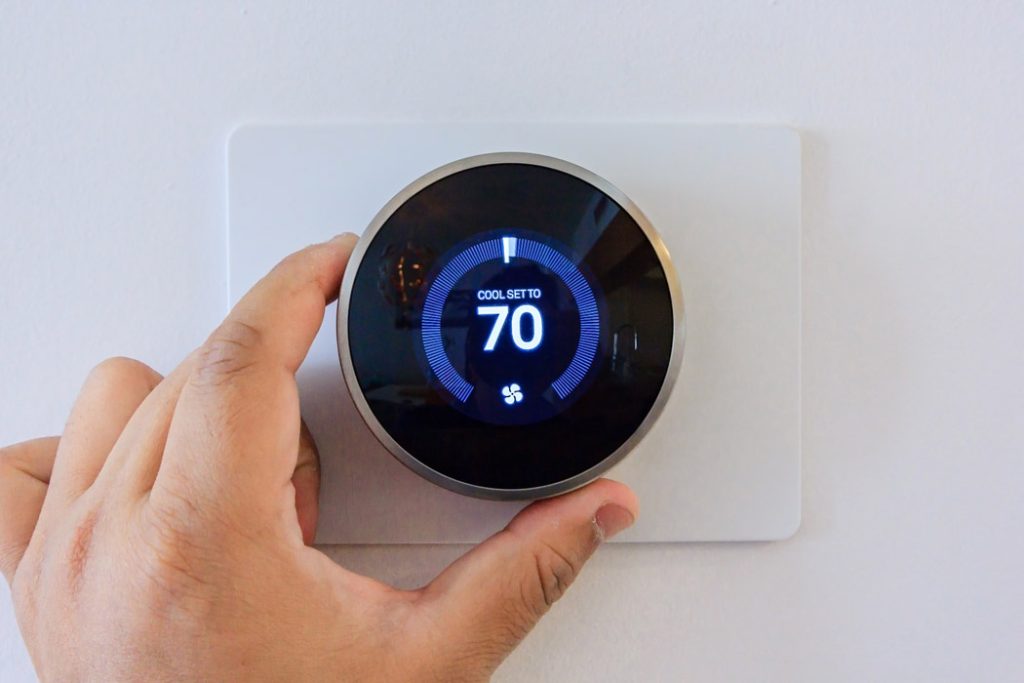
Imagine having a device in your home that manages your heating and cooling and keeps an eye on the air quality. Smart thermostats are doing just that, making them more than just a gadget for comfort. They’re equipped with sensors that detect pollutants and adjust settings accordingly, ensuring you breathe cleaner air. But how exactly do these devices work, and what should you consider when choosing one for your home? Understanding these aspects might change your thoughts about indoor air quality and energy efficiency.
Understanding Smart Thermostats
In today’s technologically advanced world, understanding smart thermostats involves recognizing their ability to learn your habits and enhance energy efficiency through intelligent algorithms. These devices monitor and analyze your daily patterns, adjusting temperature settings to maximize comfort while minimizing energy consumption. By utilizing machine learning, smart thermostats predict your preferences, adapting automatically to changes in your routine.
When you explore the workings of smart thermostats, you see how they respond to immediate inputs and anticipate future needs. They integrate with weather forecasts, adjusting settings in advance to guarantee ideal indoor temperatures. This proactive approach greatly reduces energy usage, aligning with your commitment to environmental stewardship.
Furthermore, smart thermostats often connect to mobile devices, offering remote access and real-time monitoring. This capability empowers you to make informed decisions about your heating and cooling, even when you’re away. These systems’ detailed data and insights allow you to identify trends and adjust to enhance efficiency. By embracing smart thermostats, you’re not just improving your home’s comfort but also contributing positively to the community by promoting sustainable energy practices.
Key Features and Benefits
When considering smart thermostats, you’ll find that their key features include adaptive learning, remote control capabilities, and energy consumption analytics, each offering distinct benefits for efficiency and convenience. Adaptive learning enables the thermostat to understand your schedule and preferences, optimizing temperature settings without requiring manual adjustments. This results in a more comfortable environment while reducing energy waste.
Remote control capabilities allow you to adjust settings using a smartphone app from anywhere. This feature is particularly beneficial if you have a dynamic schedule or manage multiple properties. You can guarantee the temperature is right before you or anyone else arrives, enhancing comfort and reducing unnecessary energy usage.
Energy consumption analytics provide detailed insights into your energy use patterns. By analyzing this data, you can identify opportunities to reduce consumption and costs, aligning with environmentally conscious practices. Smart thermostats can offer suggestions for energy-saving adjustments, empowering you to make informed decisions.
These features collectively enhance not only your personal comfort but also your ability to manage resources efficiently. By integrating these technologies, you’re improving your environment and contributing to broader energy conservation efforts, serving your household and the planet.
Air Quality Monitoring
Smart thermostats with air quality monitoring sensors provide real-time data on indoor pollutants, enabling you to maintain a healthier home environment. These devices detect common contaminants like volatile organic compounds (VOCs), carbon dioxide (CO2), and particulate matter (PM2.5). By analyzing this data, you gain insights into the specific sources of pollution and take proactive steps to mitigate them.
When you install a smart thermostat with air quality monitoring, it continuously measures the air for harmful elements. The real-time alerts inform you of air quality changes, allowing you to respond promptly. You can adjust ventilation settings or take other corrective actions to improve air quality before it reaches hazardous levels. This functionality is vital for homes with children, elderly individuals, or those with respiratory conditions particularly sensitive to poor air quality.
Moreover, these smart systems can integrate with other smart home devices, offering an extensive ecosystem for air quality management. You can program automated responses, such as activating air purifiers or adjusting HVAC settings, ensuring your home remains a safe haven. This proactive approach enhances individual well-being and demonstrates a commitment to creating a healthier living space for everyone.
Energy Efficiency Improvements
Equipped with advanced algorithms, smart thermostats optimize energy use by learning your schedule and preferences, guaranteeing efficient heating and cooling without unnecessary energy consumption. These devices automatically analyze your daily routines to adjust temperatures when you’re home or away, maximizing comfort and minimizing waste. This adaptive learning approach reduces energy bills and contributes to environmental conservation, aligning with a broader mission of serving the community by reducing carbon footprints.
Smart thermostats provide precise control over your HVAC system by utilizing sensors and connectivity. They can detect when rooms are occupied and adjust settings accordingly, avoiding energy use in unoccupied spaces. This feature ensures that energy is directed only where it’s needed, fostering an efficient distribution of resources. Additionally, the thermostats offer energy usage reports, enabling you to make informed decisions about your consumption patterns.
You can set goals for energy savings, and the thermostat will guide you in achieving them through actionable insights. Participating in demand response programs helps reduce peak load on the energy grid, contributing to a more stable and sustainable energy infrastructure. Through these capabilities, smart thermostats empower you to enhance energy efficiency effectively.
Integration With Smart Homes
Modern thermostats integrate seamlessly into your smart home ecosystem and communicate with other devices to enhance energy management and improve overall home automation. By connecting to platforms like Amazon Alexa, Google Home, or Apple HomeKit, these thermostats can receive and execute voice commands, allowing you to adjust temperature settings hands-free. This integration also enables you to create customized routines that align with your daily schedule and preferences.
Smart thermostats can work with sensors and automated blinds to maintain ideal indoor conditions. For example, they can lower the blinds when direct sunlight increases indoor temperature, reducing the need for air conditioning. This interconnectivity guarantees that your home remains comfortable while minimizing energy usage. Additionally, they can integrate with security systems to adjust settings when you leave or return home, enhancing security and energy efficiency.
Moreover, smart thermostats provide real-time data analytics, presenting insights into energy consumption patterns. This information enables you to make informed decisions, reducing energy bills and environmental impact. By automating and improving your home’s climate control, you serve others by fostering a sustainable living environment that contributes to a greener future.
Health and Wellness Impact
Modern thermostats monitor indoor air quality, affecting your health by regulating temperature and humidity levels to reduce allergens and respiratory issues. By maintaining ideal humidity, these devices help prevent the growth of mold and dust mites, common triggers for allergies and asthma. They guarantee the air you breathe is comfortable and conducive to better respiratory health.
In addition to temperature control, smart thermostats can track pollutants such as volatile organic compounds (VOCs) and carbon dioxide levels, offering insights into your home’s air quality. They provide real-time data and alerts, allowing you to take prompt action, such as increasing ventilation or using air purifiers, to mitigate health risks.
Furthermore, smart thermostats often integrate with other smart home devices, creating a holistic approach to wellness by coordinating air quality improvements with lighting and air filtration systems. This synergy enhances your environment, making it more health-focused and supportive of your well-being.
Choosing the Right Model
When selecting a smart thermostat, consider compatibility with your HVAC system, ease of use, and energy-saving features to guarantee it meets your needs. Begin by confirming that the thermostat is compatible with your existing HVAC setup, whether a single-stage, multi-stage, or heat pump system. This guarantees seamless integration and ideal performance. Evaluate ease of use by examining user interfaces and mobile app functionalities. Intuitive controls and user-friendly apps simplify temperature adjustments and scheduling, allowing you to manage your home’s climate efficiently.
Energy-saving capabilities are vital for reducing utility costs and promoting environmental sustainability. Look for models with adaptive learning algorithms that analyze your patterns and adjust settings for maximum efficiency. Features like geofencing, which adjusts temperatures based on location, can enhance comfort and energy savings. Also, prioritize models with thorough air quality monitoring systems. These provide valuable insights into indoor air conditions, allowing you to make informed adjustments to improve air quality, which is essential for the well-being of those you serve.
Installation and Setup Tips
To guarantee a smooth installation of your smart thermostat, start by disconnecting power to your HVAC system to prevent electrical hazards. This vital step guarantees safety as you proceed. Carefully remove your old thermostat and note the wiring; labeling each wire can help you manage connections later. Understanding your home’s wiring configuration is important, as this affects compatibility.
When you’re ready to install your new device, follow the manufacturer’s instructions precisely. Typically, you’ll need to mount the smart thermostat’s base plate first, ensuring its level for peak performance. Next, connect the wires as per the labels you made earlier. Double-check connections for accuracy before securing the thermostat to the base.
After installation, reconnect the power and initiate setup through the thermostat or its companion app. Here are a few tips to enhance the setup process:
- Verify Wi-Fi connectivity: Confirm a stable connection for seamless control.
- Calibrate temperature settings: Adjust to your desired comfort levels.
- Enable geofencing features: Automate temperature adjustments based on your location.
- Set schedules: Maximize energy efficiency by programming usage patterns.
Cost and Savings Analysis
After successfully setting up your smart thermostat, evaluating the cost implications and potential savings becomes critical to understanding its financial benefits. Initial investment varies based on brand, features, and compatibility, ranging from $100 to $300. Installation costs might add $50 to $100 if professional assistance is required. However, the long-term savings are where smart thermostats truly pay off.
Smart thermostats can reduce energy consumption by 10-15% by optimizing heating and cooling schedules. Depending on your energy rates and usage patterns, this translates to an annual savings of approximately $130 to $200. Furthermore, the real-time monitoring and remote control features help you make informed decisions about energy use, preventing unnecessary expenditures.
Smart thermostats also contribute to reduced maintenance costs. Maintaining consistent indoor temperatures minimizes wear on HVAC systems, potentially extending equipment lifespan. Additionally, many models offer diagnostic alerts, allowing you to address minor issues before they escalate into costly repairs.
For those focusing on sustainability, smart thermostats promote responsible energy use, aligning financial savings with environmental stewardship. By investing in this technology, you optimize your budget and contribute to broader energy conservation efforts, serving your household and community efficiently.
Future Trends in Smart Technology
The evolution of smart technology is set to revolutionize home automation, with advancements in AI and IoT driving increased efficiency and personalized user experiences in smart thermostats. As an individual seeking to enhance well-being through technology, you should focus on the following future trends:
- Predictive Analytics: Smart thermostats will leverage machine learning to anticipate your needs by analyzing past behavior and environmental conditions, ensuring ideal comfort and energy savings.
- Enhanced Connectivity: With IoT, these devices seamlessly integrate with other smart home gadgets, enabling a more cohesive and automated living environment.
- Advanced Air Quality Sensors: Future models will feature improved sensors to monitor and adjust indoor air quality, vital in maintaining a healthy home.
- Eco-Friendly Innovations: Expect developments in energy-efficient technologies, which will allow you to reduce your carbon footprint while enjoying cost savings.
As you explore these trends, consider their impact on daily life and the potential for contributing to a sustainable future. By staying informed and proactive, you’ll not only enhance your living space but also support a broader mission of service—improving the community’s health and environmental responsibility. Embrace these advancements, and you’ll be at the forefront of a smarter, more caring world.
Conclusion
Imagine a future where your home anticipates your needs, effortlessly balancing comfort and efficiency. With smart thermostats, you’re on the brink of this reality. These devices don’t just adjust temperatures—they revolutionize air quality control and energy management. As you integrate them into your smart home ecosystem, expect a seamless blend of technology and sustainability. The decision is yours: embrace this innovation and access a healthier, cost-effective living environment. Are you ready to transform your home?
Frequently Asked Questions
How Do Smart Thermostats Maintain Privacy and Data Security?
You guarantee privacy and data security by employing encryption protocols, securing data transmission, and implementing user authentication. Regularly update device firmware and settings to guard against vulnerabilities, maintaining a secure environment for serving your community effectively.
Can Smart Thermostats Work During Power Outages?
Smart thermostats typically can’t function during power outages, as they rely on electricity for operation. However, some models have battery backup options. Consider installing a generator or UPS to guarantee continuous operation and maintain comfort for others.
Are Smart Thermostats Compatible With Older HVAC Systems?
Don’t judge a book by its cover; many smart thermostats integrate smoothly with older HVAC systems. You’ll need to check compatibility, ensuring the thermostat supports your system’s wiring and control signals for peak performance and energy efficiency.
What Are the Environmental Impacts of Smart Thermostat Production?
You assess smart thermostat production’s environmental impacts by analyzing resource extraction, energy consumption, and waste generation. To minimize ecological footprints and effectively serve the community’s environmental needs, prioritize sustainable materials, efficient manufacturing, and recycling initiatives.
Do Smart Thermostats Require Regular Software Updates?
Imagine a garden thriving with updates. Like tending plants, you’ve got to guarantee your smart thermostat receives regular software updates. These updates enhance functionality, improve efficiency, and foster a better environment, effectively serving your home’s needs.