
Do you need personalized guidance on how to get the best out of your HVAC system? Call Leith Heating & Cooling today to book a consultation.
Many homeowners understand the struggle between staying comfortable and keeping energy bills reasonable. According to the Department of Energy, HVAC systems account for more than 50% of the energy consumption in the average home.
Therefore, homeowners often look for ways to heat and cool their homes and keep the numbers down without sacrificing comfort. As such, many opinions abound on setting a thermostat to strike that perfect balance.
What is the reality? What’s the best thermostat setting for the various seasons? The team at Leith Heating & Cooling, one of the most experienced Elgin HVAC companies, covers the details in this blog post.
Setting a Thermostat for Summer
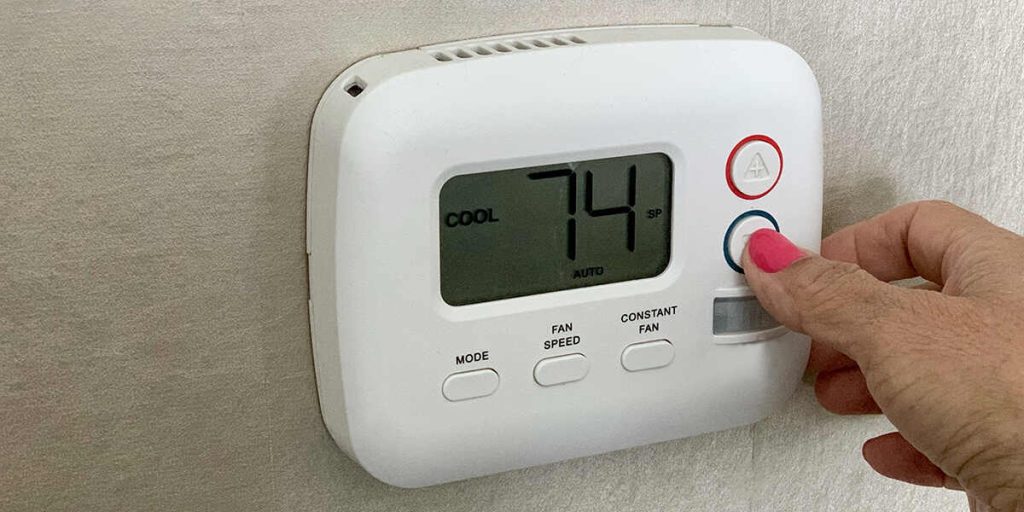
Summer temperatures in Elgin hover around 80 degrees during the peak of the day and drop to around 60 degrees when the sun goes down. Therefore, you should set your thermostat around 75 degrees when at home for that perfect balance between energy savings and comfort.
When you leave, turn up the thermostat to around 80-85 degrees for even more savings.
Keeping your home slightly warmer when you’re away reduces your air conditioning system’s workload. When you reset the thermostat to around 75 degrees, your air conditioning system won’t work too hard to lower the indoor temperature.
Following these temperature recommendations can reduce your cooling costs by up to 12%.
Setting a Thermostat for Winter
During the colder months of the year in Elgin and the surrounding areas, set your thermostat at 68 degrees when at home and awake. When you’re asleep or away from home, you should consider turning down the heat by lowering the thermostat to around 63 to 65 degrees.
Setting your thermostat within these bounds can lower your heating costs significantly compared to leaving it at 75-80 degrees through the winter. That 10–15-degree difference may translate to savings of up to 15% over an eight-hour window.
Over an entire day, you may end up cutting your heating bill in half without feeling too uncomfortable at any point.
On the coldest days of the year, when you feel like cranking up your home heating past 68 degrees, throw on some warm clothing to restore your comfort.
Setting a Thermostat for Spring and Fall
Temperature management becomes trickier in spring and fall. The weather is more unpredictable during this window as a bright and sunny day can give way to high-humidity cool weather.
The best way to manage heating and cooling during this period includes setting the thermostat to “Auto” and then setting your desired temperature boundaries.
This way, your HVAC won’t run a cooling cycle when temperatures have dropped significantly or a heating cycle when the temperature warms up.
Setting a Thermostat for Adequate Sleep
The importance of quality sleep cannot be overemphasized. It can improve immune function, prevent cognitive decline, reduce the risk of cardiovascular disease, and improve productivity.
Numerous scientific findings show that the temperature settings in your home can influence sleep quality. You’ve likely experienced the report of these findings multiple times already. How many times have you instinctively woken up because you feel too cold or too hot?
Therefore, you need to know how to set a thermostat for the perfect bedtime. Some general guidelines on the ideal thermostat settings for sleep time are to set the thermostat to 65 degrees in the winter or cold spring and fall nights and 78 degrees in summer or warm spring and fall nights.
With these settings, you will enjoy a pleasurable night’s rest every time without seeing a significant uptick in your energy bills.
How To Decide on the Ideal Temperature for Your Home
The temperature recommendations above offer guidelines proven to keep your energy bills down without compromising your comfort. However, it’s hard for everyone to use the same numbers for several reasons.
First, home design and insulation ratings can influence how a single-degree change in temperatures can affect the comfort levels in an indoor space. Secondly, it’s hard to account for personal preferences. Therefore, you may still need to work out the ideal thermostat settings for your home.
The best way to figure it out starts with setting your thermostat to your desired temperature for any of the seasons, then gradually reducing or increasing the setting toward our recommended boundaries for each of the seasons one degree at a time.
Wait an hour after each degree change to see how it affects comfort levels in your property. When you reach a setting where you’re no longer happy, dial the thermostat reading back by one or two degrees, and you’ve found your ideal sweet spot.
Easy Temperature Control With a Smart Thermostat
Does it feel like too much work going back and forth to your thermostat and remembering what thermostat reading to set? You can make things a lot easier by making the switch to a smart thermostat.
A quality smart thermostat will learn your usage habits over time and make the required temperature changes without your interference. And if you do need to interfere, you don’t have to leave the comfort of your bed or race back home earlier than normal. You can tweak the readings on your smartphone!
Get Further Guidance on Setting a Thermostat From Leith Heating & Cooling
Are you still unsure about the ideal temperature sweet spot for your property? Our highly experienced technicians here at Leith Heating & Cooling can provide the guidance you need. We’ll carefully evaluate your HVAC needs in relation to your system and your personal preferences and recommend the right settings for you.
We are local HVAC technicians. Therefore, we incorporate our understanding of the local weather into any of our recommendations. We’ll also discuss the advantages of a smart thermostat and help you install one if necessary.
To learn more about setting a thermostat for all seasons, call the Leith Heating & Cooling team in Elgin, Illinois, today at (847) 648-9977 to book an appointment.