
When winter’s chill sets in, the last thing you want is a heating system breakdown. Taking proactive steps can greatly reduce the chances of this inconvenient scenario. Start by scheduling regular inspections with a qualified technician to catch issues early. Don’t overlook simple tasks like replacing air filters and cleaning vents and ducts, which maintain ideal airflow. Testing the thermostat and ensuring the pilot light is functional are also essential checks. But what about those unexpected signs of trouble? Understanding when to call a professional could be the key to keeping your home warm and cozy.
Schedule Regular Inspections
To guarantee your heating system operates efficiently during emergencies, schedule regular inspections by a qualified technician. These inspections are crucial for proactive maintenance, verifying every component functions effectively. A technician can identify wear and tear or potential issues that could lead to system failures when you need it most. Addressing these concerns early prevents costly repairs and maintains a comfortable environment for those relying on you.
During an inspection, the technician will examine critical elements such as the heat exchanger for cracks, the burners for proper ignition and combustion, and the thermostat for accurate temperature readings. They’ll also verify that safety controls are working and confirm that there are no carbon monoxide leaks. This thorough evaluation is essential for the safe operation of your heating system.
Regular inspections not only enhance efficiency but also extend the lifespan of your equipment. By investing time in routine check-ups, you commit to the well-being of those you serve. This attention to detail reflects your dedication to providing a reliable and safe space. Remember, a well-maintained heating system is key to preventing emergencies and securing peace of mind for you and those in your care.
Replace Air Filters
Why is it vital to replace air filters regularly to verify your heating system runs efficiently and maintains peak air quality? Air filters trap dust, pollen, and other particles, preventing them from circulating in your home. Over time, these filters become clogged, reducing airflow and forcing your heating system to work harder. This decreases efficiency and increases energy costs and the risk of a breakdown.
To confirm your system operates at its best, replace the air filter every 1-3 months, depending on usage and the type of filter. High-efficiency particulate air (HEPA) filters, for example, capture finer particles but might require more frequent replacements. Regular replacement supports the system’s longevity and enhances air quality, providing a healthier environment for those you care for.
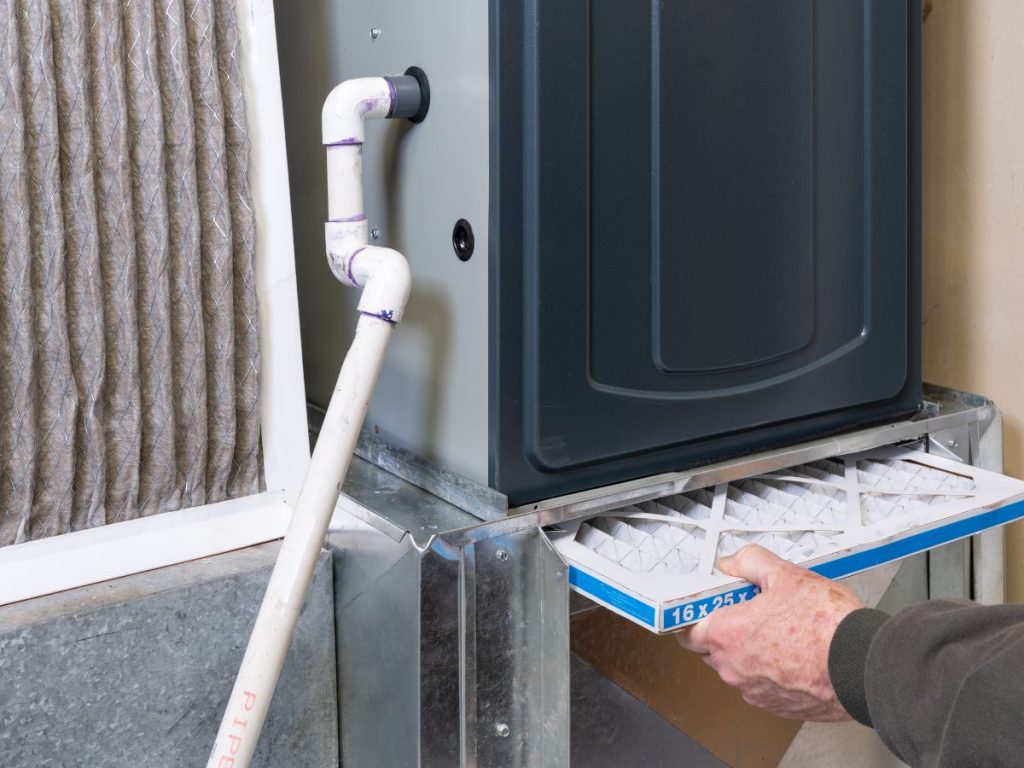
To replace the filter, first, turn off the heating system. Locate the air filter compartment, usually near the return air duct. Remove the old filter carefully, ensuring you don’t dislodge trapped particles. Insert the new filter, following the directional arrows for proper airflow. By taking this simple yet vital step, you’re proactively maintaining your heating system’s efficiency and contributing to a cleaner, healthier home environment.
Clean Vents and Ducts
Regularly cleaning vents and ducts guarantees peak airflow, reduces the risk of allergens, and enhances the overall performance of your heating system. By maintaining clean air passages, you can greatly improve the air quality in your home, ensuring a healthier environment for your loved ones. Blocked or dirty ducts can lead to uneven heating and increased energy consumption, ultimately costing you more utility bills. Here’s how you can effectively clean your vents and ducts:
- Turn off the system: Before you begin, shut off your heating system to prevent dust from circulating during cleaning.
- Remove vent covers: Use a screwdriver to carefully remove them, and wash them with soap and water to remove any dust and grime.
- Vacuum the ducts: Use a vacuum with a long hose attachment to suck out dust and debris from the ductwork.
- Inspect for mold and mildew: Check for any signs of mold, as this can indicate moisture issues that need addressing.
- Seal and replace: Once cleaned, ensure the vents are sealed properly when replacing covers to maintain system efficiency.
Test the Thermostat
Confirming your thermostat functions correctly is essential for maintaining an efficient heating system and preventing unexpected temperature fluctuations. Start by checking that your thermostat is set to the correct mode. Switching from ‘cool’ to ‘heat’ can often resolve issues. Next, verify that the temperature setting aligns with your desired comfort level. You may need to recalibrate the device if the room temperature doesn’t match the thermostat setting.
Remove the thermostat cover to inspect the internal components. Look for dust or debris that might interfere with its operation, and gently clean it using a soft brush. Confirm that connections are secure and wires are intact, as loose wires can cause erratic behavior.
To test the thermostat’s functionality, adjust the temperature setting to trigger the heating system. Listen for the click indicating the thermostat is sending a signal. If the heating system doesn’t respond, consider replacing the thermostat batteries or consult the manufacturer’s manual for troubleshooting.
Check Pilot Light
When maintaining your heating system, check the pilot light to confirm it’s lit and burning with a steady blue flame, indicating proper operation. A blue flame shows the gas burns efficiently, guaranteeing safe and effective heating. Here’s how you can verify your pilot light is functioning correctly:
- Observe the Flame Color: A blue flame suggests complete combustion. If the flame is yellow or orange, it might indicate a problem with the burner or gas supply.
- Check the Flame Size: The pilot light should be around 1.5 to 2 inches tall. If it’s too small, it may not adequately ignite the burner.
- Confirm the Thermocouple is Secure: This safety device should be positioned correctly to detect the flame and allow gas flow. If it’s loose, the pilot light could go out.
- Clean the Pilot Orifice: Dust or debris can block the orifice, causing an unstable flame. Turn off the gas and clean it with a needle or compressed air.
- Inspect for Gas Leaks: If you smell gas, turn off the system and contact a professional immediately.
Inspect Electrical Connections
Inspecting electrical connections is essential to prevent malfunctions and guarantee your heating system operates safely and efficiently. Begin by turning off the power to your heating system at the circuit breaker to ascertain safety. Next, examine all accessible wires and connections for any signs of wear or corrosion. Damaged or loose cables can lead to poor performance or electrical hazards. Tighten any loose connections using a screwdriver, verifying they’re secure but not over-tightened.
Pay close attention to terminal screws and clamps. These components can loosen over time due to vibrations and thermal expansion. If you encounter any frayed wires, they need replacement to prevent shorts or fires. A multimeter is a valuable tool for checking voltage across connections. Verify readings are within the manufacturer’s specified range. If readings are off, it may indicate an underlying issue requiring professional assessment.
Look for any discoloration or burning smells around the connections, as these are indicators of overheating. Overheating can lead to equipment failure and should be addressed immediately. By diligently inspecting and maintaining your heating system’s electrical components, you help guarantee its longevity and reliability, ultimately serving those who depend on it.
Lubricate Moving Parts
After securing the electrical connections, you should focus on lubricating the moving parts to minimize friction and optimize the performance of your heating system. Proper lubrication reduces the wear and tear on components, guaranteeing they move smoothly and efficiently. This not only prolongs the life of your system but also reduces the likelihood of unexpected breakdowns. Use a high-quality lubricant for heating systems to provide the best protection and performance.
When lubricating your heating system, pay attention to the following components:
- Blower Motor Bearings: These bearings are critical for the smooth operation of the blower motor and need regular lubrication to prevent noise and wear.
- Fan Belts: Confirm that any belts within your system have a light lubricant coating to enhance flexibility and reduce friction.
- Pulleys: Check pulleys for any signs of wear and apply lubricant to maintain their efficient rotation.
- Shafts: Shafts should be lubricated to allow smooth movement and prevent binding or jamming.
- Valves: Lubricate valves to guarantee they open and close without resistance, maintaining effective airflow and heating efficiency.
Clear the Area Around the Heater
Guarantee there’s at least a three-foot clearance around your heater to prevent any obstructions that could impede airflow or create a fire hazard. This space guarantees that the heater operates efficiently, allowing air to circulate properly and reducing the risk of overheating. Remove any flammable materials such as paper, fabric, or cleaning supplies from this area. By doing so, you’re safeguarding your home and assuring the safety of those you serve.
Check for dust accumulation or debris around the heater, as these can obstruct airflow and increase the risk of malfunction. Vacuum or sweep the space regularly to maintain cleanliness. This simple practice can prevent unexpected shutdowns, keeping the system running smoothly during critical times.
Inspect the surrounding area for any items that might inadvertently be pushed closer over time, such as furniture, boxes, or storage bins. Keeping these items at a safe distance guarantees unrestricted airflow, promoting ideal performance. Encourage those living with you to be mindful of this space, especially if you’re involved in community service tasks. Your proactive approach to maintaining the heating area can greatly reduce the likelihood of emergencies, providing warmth and comfort to all.
Monitor Fuel Supply
Guarantee your heating system has an adequate fuel supply to maintain consistent operation and prevent unexpected shutdowns. Regularly monitoring your fuel levels guarantees your system’s reliability, especially during peak usage. It’s important to establish a routine for checking the fuel supply, whether using natural gas, oil, or propane. Understanding fuel consumption patterns will help you plan refills efficiently and avoid emergencies. Here are some key steps you can take:
- Check Gauge Readings: Inspect the gauges on your fuel tank regularly. Set reminders to ensure you’re monitoring levels consistently.
- Schedule Deliveries: Arrange fuel deliveries in advance. Suppliers may offer automatic delivery options based on your consumption history.
- Maintain Clear Access: Guarantee delivery personnel have unobstructed access to your fuel tank. This minimizes delays in replenishing your supply.
- Monitor for Leaks: Regularly inspect your fuel lines and tanks for leaks. Promptly address any signs of leakage to prevent hazardous situations.
- Track Usage Trends: Record your fuel usage. This data helps you anticipate when you’ll need a refill and adjust your consumption habits if necessary.
Know When to Call Professionals
Recognize signs of complex issues in your heating system to know when to call professionals for effective repairs. If you notice unusual noises such as banging, clanking, or persistent humming, it could indicate mechanical issues that require expert attention. Inconsistent temperature outputs or cold spots in your home might suggest problems with the thermostat or ductwork. Detecting a burning smell or persistent odors may signify electrical issues or a potential gas leak, both of which demand immediate professional intervention.
Monitoring your system’s efficiency is key. A noticeable spike in energy bills without a corresponding increase in usage often points to an underlying issue that only a professional can diagnose accurately. If your heating system is cycling on and off frequently, it could be a sign of short cycling, a problem that risks damaging your unit if not addressed promptly.
Attempting complex repairs on your own can worsen the issue and compromise safety. Professionals have the training, tools, and expertise to resolve intricate problems efficiently. Knowing when to call in experts guarantees that your heating system serves your home reliably, safeguarding comfort and peace of mind for those you care for.
Conclusion
By sticking to a maintenance routine, you’re ensuring your heating system runs smoothly and efficiently. It’s like the theory of preventive medicine—treating small issues before they become big problems. Regular inspections, changing filters, and cleaning ducts might seem trivial, but they prevent costly repairs. Keep moving parts lubricated, clear the area around your heater, and stay on top of your fuel supply. When in doubt, don’t hesitate to call a professional. Your wallet and comfort will thank you.
Frequently Asked Questions
How Can I Improve the Energy Efficiency of My Heating System?
Think of your heating system as a well-oiled machine. Regularly clean filters, schedule professional inspections, seal duct leaks, and install a programmable thermostat. Each step guarantees your system runs efficiently, saving energy and helping others stay warm.
What Are the Signs of a Failing Heating System?
You might notice uneven heating, strange noises, or increased energy bills. Look for frequent cycling, a yellow pilot light, or unusual odors. These signs indicate your heating system’s struggling and might need immediate attention. Stay proactive!
Can I Perform Basic Maintenance Myself, or Should I Hire a Professional?
You can perform basic maintenance tasks like cleaning filters and checking vents, but hiring a professional for more complex repairs is crucial. Professionals guarantee efficient operation and prevent issues that could disrupt your ability to serve others.
How Do I Prepare My Heating System for Extreme Cold Weather?
Verify your heating system’s insulation is intact, clean the vents, replace filters, and test the thermostat. Inspect for leaks and blockages. Schedule a professional check-up to confirm efficiency and assure warmth for those you serve.
What Should I Do if My Heating System Makes Unusual Noises?
Check for loose components When your heating system auditions for a horror movie with those eerie noises. Tighten screws, lubricate moving parts, and inspect belts. Confirm that the airflow isn’t obstructed. If the symphony continues, call a professional.